
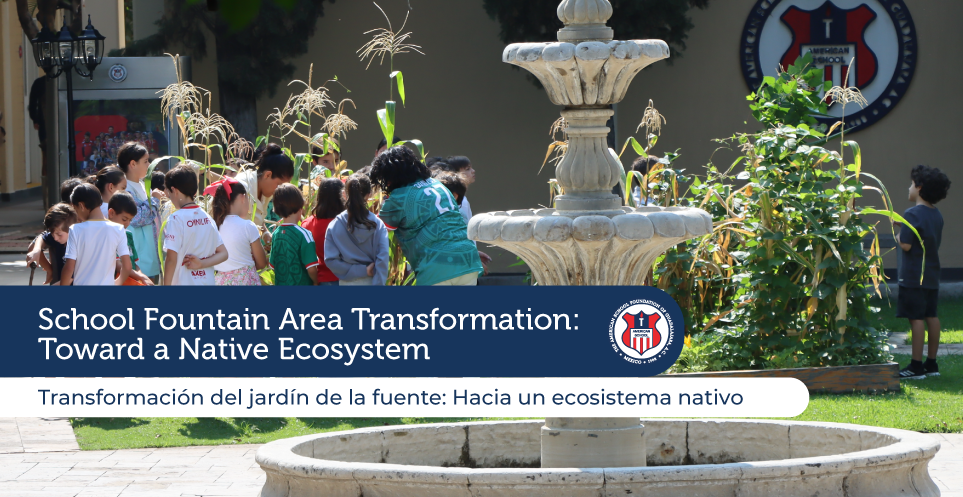
SCHOOL FOUNTAIN AREA TRANSFORMATION: TOWARD A NATIVE ECOSYSTEM
As part of ASFG's commitment to our community’s well-being and Jalisco's natural environment, we are thrilled to share our School Fountain Area Renovation Project. This initiative was developed in collaboration with Taller Bac, a Guadalajara-based architecture and landscape design studio.
Why Are We Replacing Certain Existing Trees?
The current garden, located in the elementary school, in front of the auditorium, features ficus (ficus benjamina), cypresses, and palm trees. While these trees have long been part of the school’s visual identity, they pose significant risks and limitations that must be addressed. The new garden will double the number of trees on campus, replacing the current ones with native species.
- Ficus Benjamina: Native to South and Southeast Asia, these trees have extraordinarily invasive roots that grow aggressively underground in search of water and nutrients. This can cause serious damage to foundations, sidewalks, water pipes, and underground electrical wiring, which is why their use in urban and school gardens is highly discouraged. Additionally, as an exotic species, they offer no ecological benefits to local wildlife.
- Cypresses: Native to the Mediterranean, these trees offer very little shade in Jalisco's climate and contribute minimally to carbon capture and air oxygenation. Furthermore, their dense foliage can become a breeding ground for roaches, spiders, and other unwanted pests, posing a health and safety concern in areas frequented by children.
- Palm Trees: These are also non-native to the region. They provide virtually no useful shade or oxygen, and their structure can host rodent and insect colonies.
Replacing these species is not an aesthetic choice; it’s a measure for safety, health, and environmental responsibility. The removed tree material will be chipped and repurposed as mulch for other green areas on campus, giving it a second useful life.
THE NEW GARDEN: A LIVING ECOSYSTEM FOR LEARNING
We will install a garden designed with species native to Western Mexico, specifically selected for their adaptability to the region's climate and soil. The new landscape will feature trees and plants such as the golden trumpet tree (primavera), guamúchil, palo verde, arrayán, cascabela, and the yucca jaliscensis. It will also include shrubs like native salvias, agaves, lantanas, marigolds (tagetes), and milkweed (asclepias), all of which hold high ecological and pollinator value.
- 80% Reduction in Water Consumption: Water usage will drop significantly thanks to the selected species' natural resilience to the local climate.
- Lower Maintenance: These plants are adapted to the local environment, eliminating the need for fertilizers, pesticides, or intensive watering.
- Positive Climate Impact: Native species capture carbon more efficiently and help reduce the urban heat island effect, regulating the surrounding temperature for the benefit of the entire school community.
- A Living Botanical Garden: Students will be able to identify, observe, and learn about Jalisco’s native flora firsthand as part of their daily routine.
- Increased Biodiversity: As the plants establish themselves, they will attract birds, butterflies, and other pollinators. Additionally, native plants are significantly less prone to pests and diseases.
- New Ways to Use the Space: The garden will feature three small plazas (two with pergolas), lighting for evening activities, and better-designed walkways. What is currently mostly grass will be transformed into a rich, diverse, and well-structured landscape.
Timeline and Next Steps
Construction will take place over the summer so the garden is ready to welcome students at the start of the new school year. However, please keep in mind that the new species will need time to adapt and grow before reaching their full potential. We expect to see the garden's evolution truly take shape starting about three months after the project's completion. This process will not only enrich our campus environment but will also offer a valuable hands-on learning opportunity beyond the classroom, providing beautiful spaces that inspire our students to explore, create, and trust in their own potential.
This project is the result of careful reflection on our region's natural environment and the role school spaces play in our students' environmental education. We appreciate your continued trust and support, and we are available to answer any questions you may have at businessoffice@asfg.edu.mx